Gardens in Healthcare: From Burden to Backbone
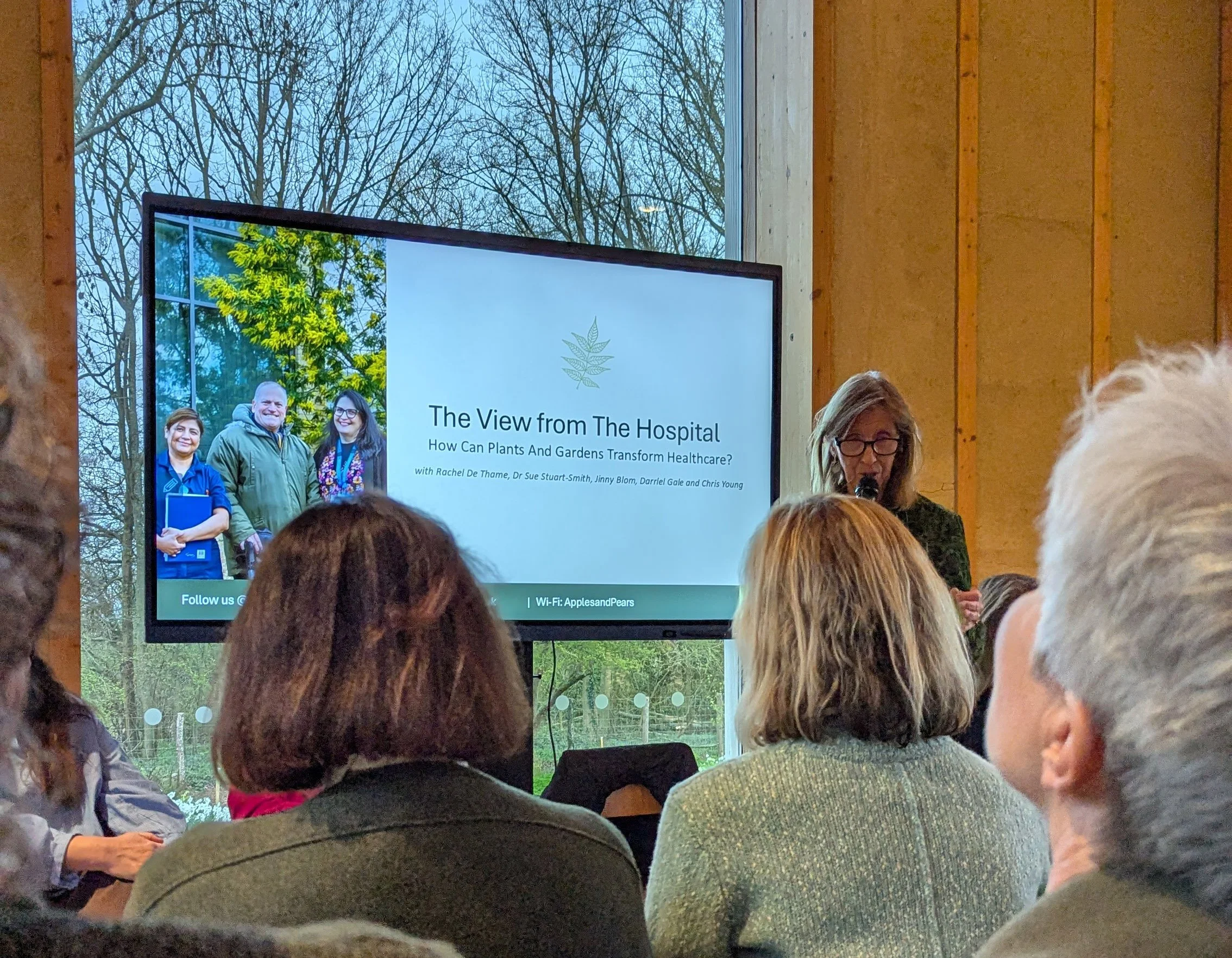
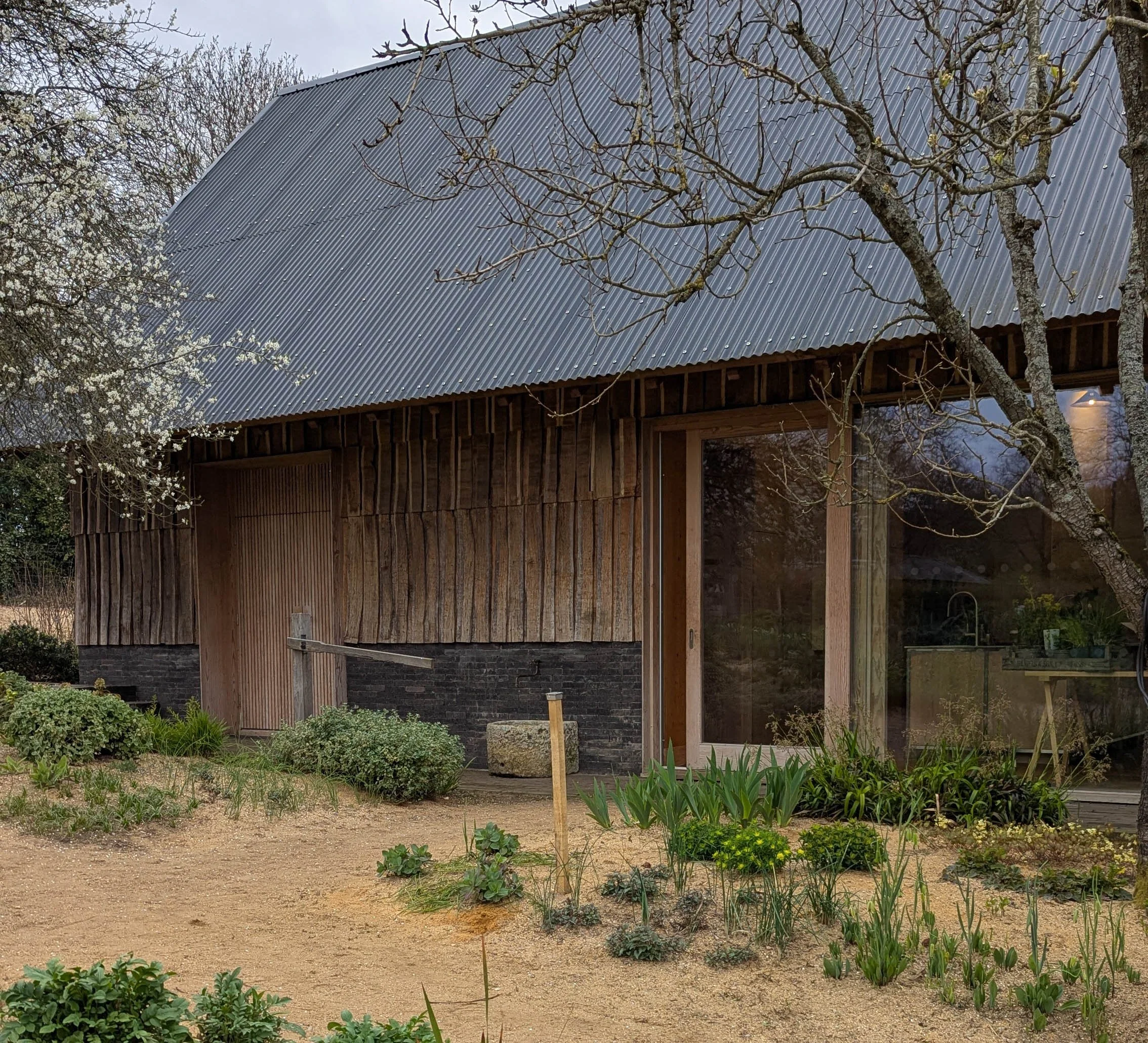
On Wednesday 1 April I attended The View From The Hospital: How Can Plants And Gardens Transform Healthcare? at The Apple House (The Serge Hill Project) in Hertfordshire. A thoughtful, quietly powerful evening with voices including Rachel de Thame, Dr Sue Stuart-Smith, Jinny Blom, Darrel Gale and chaired by Chris Young, supporting the redevelopment around Mount Vernon Cancer Centre.
I also had the pleasure of sitting next to Juliet Sargent. We exchanged notes throughout the talk and our conversations stayed with me long after the evening ended.
What landed
Gardens in healthcare settings are not decoration. They are part of care. Yet in reality, they are still treated as a cost.
In the current NHS climate, they sit behind equipment, staffing and core services. Even with strong evidence, they are often seen as something to maintain rather than something that actively contributes.
The evidence is there:
Access to nature is linked to shorter hospital stays
Reduced pain perception and stress markers
Improved sleep and recovery rates
Better staff wellbeing and retention
The problem is not belief. It is priority.
After a decade working in arts and health within a hospital environment, I recognise this tension immediately. You are not just advocating for a garden. You are competing within a system under pressure. If we want this movement to last, it has to plug into that system, not sit outside it.

“If we want this movement to last, it has to plug into that system, not sit outside it.”
Where I think we need to shift
1. Speak the Trust’s language
Every NHS Trust has a five year plan. Outcomes, targets, pressures. Gardens need to sit inside that framework. Not alongside it.
If a Trust is focused on recovery times, staff wellbeing or community engagement, that is where gardens need to anchor.
2. Think beyond the hospital boundary
Hospitals are not isolated. They sit within a wider community ecosystem. Local councils, universities, research bodies and community initiatives all have overlapping goals. Funding often lives there. Partnerships strengthen credibility.
3. Start small and prove it
Large scale masterplans are appealing but rarely realistic at the outset. The real opportunity is in overlooked spaces. The forgotten courtyards. The views from a ward window. Find them. Design for the people who experience them daily. Build a case from there.
4. Data is not optional
Stories alone are not enough. Track usage. Capture feedback. Measure impact.
Then communicate it clearly. Not in long reports, but in sharp, visual formats. Infographics, short films, concise case studies.
Creative and credible together.
5. Use creativity as leverage
Garden designers and gardeners are naturally visual thinkers. That is an advantage. Use it. Present ideas in a way that cuts through.
But always anchor it in evidence.
The Apple House
The circular economy point
A key thread from Dr Sue Stuart-Smith was the need for a circular economy around healthcare gardens. This matters - if gardens rely solely on charitable funding cycles, they remain vulnerable. Start, stop, stall.
A circular model could mean:
Community involvement in maintenance and growing
Partnerships with local education providers
On-site propagation or therapeutic horticulture programmes
Integration into long-term operational planning
In other words, gardens that give back as much as they require.
Why this matters to me

Before moving fully into garden design, I spent ten years working in an NHS arts charity for the Royal United Hospital in Bath. My role as Marketing and Audience Development Manger was to bridge evidence and delivery. To make the case for environments that support wellbeing, then help bring them to life.
That experience shapes everything I do now.
My design work is not just about how a space looks. It is about how it holds people. How it steadies them. How it gives them something to connect to when everything else feels uncertain.
A moment that stayed with me
When Rachel de Thame spoke about her experience of serious illness, she described that quiet, disorienting feeling of becoming untethered. A drifting away from the rhythm of normal life, from time, and even from herself. What gently brought her back was not something complex, but a tree. Watching it shift through the days and seasons offered a sense of steadiness, something constant beyond her own experience. It gave her a place to rest her attention, to feel grounded again.
That is the quiet power of a garden. It does not demand or overwhelm, it simply holds you. And in a healthcare setting, that kind of support is not an added extra. It is part of how people find their way back.