Scientifically, belonging is not decorative. It is neurological.
Environmental psychology shows that we regulate our nervous systems through surroundings that feel coherent and predictable. We relax in spaces that reflect our identity and current stage of life. When environment and identity align, stress reduces. We feel more settled, more capable, more ourselves. When they do not align, there is subtle friction. It is rarely dramatic, but it is there.

Why Interiors Keep Pace
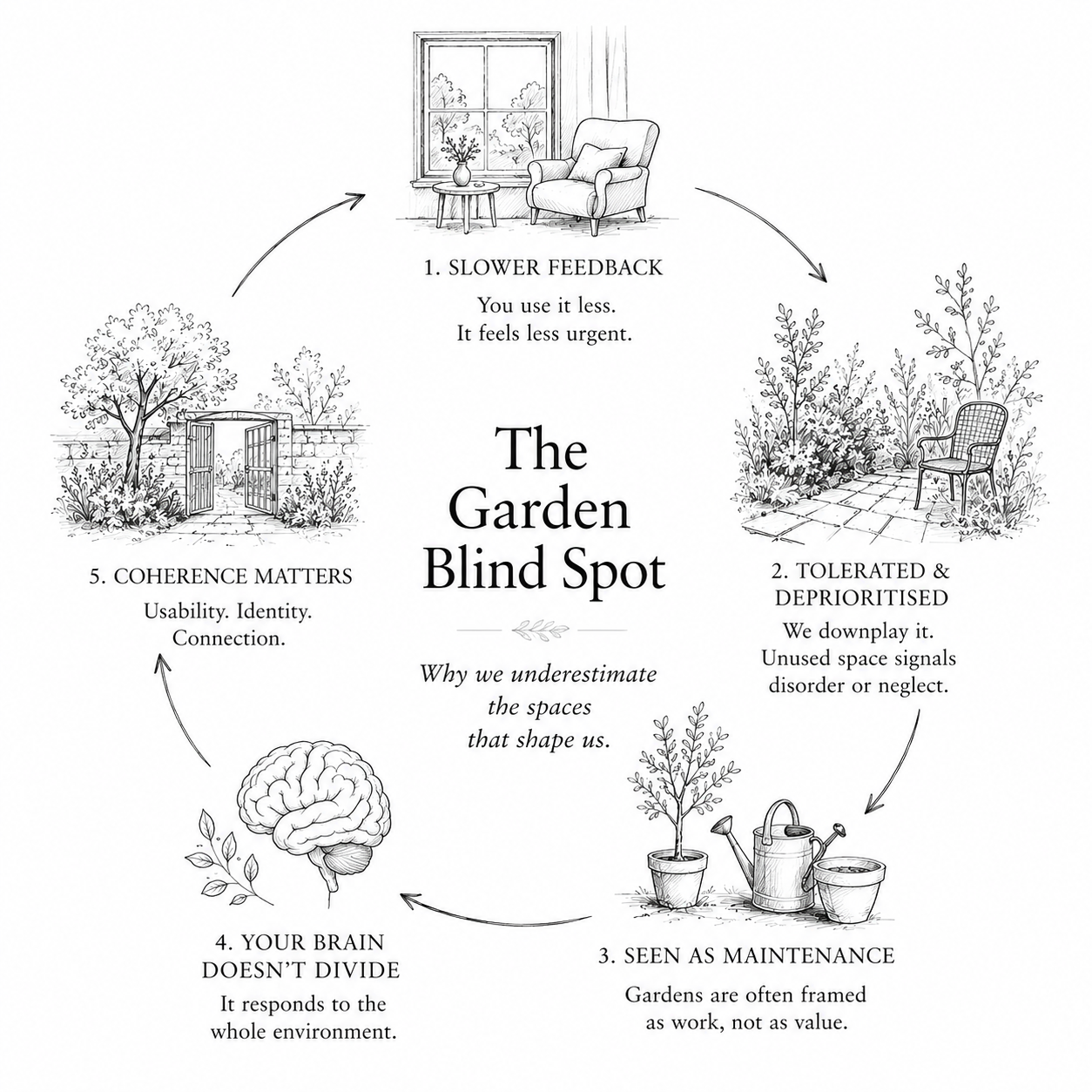
Inside the house, feedback is immediate. You sit on the sofa every evening. You cook in the kitchen daily. You walk past the same walls dozens of times a day. If something feels wrong, cramped, outdated or impractical, it irritates you quickly enough to justify change. We expect interiors to evolve. Kitchens are redesigned. Rooms are repainted. Layouts are reworked.
Why Gardens Often Do Not
Outside, the feedback loop is slower. You might only use the garden seasonally. You glance at it through glass. You tolerate awkward layouts and underused corners because they are not confronting you every hour. We downplay it. We tell ourselves it is just the garden. Yet unused space and poorly structured layouts quietly signal disorder, obligation or neglect.
There is also perception. Interiors are framed as investments. Gardens are often framed as maintenance. One is seen as adding value. The other as adding work.
But your brain does not divide inside and out. It responds to the whole environment. Coherence matters. Usability matters. Identity matters.
When Your Garden Aligns With
Your Life
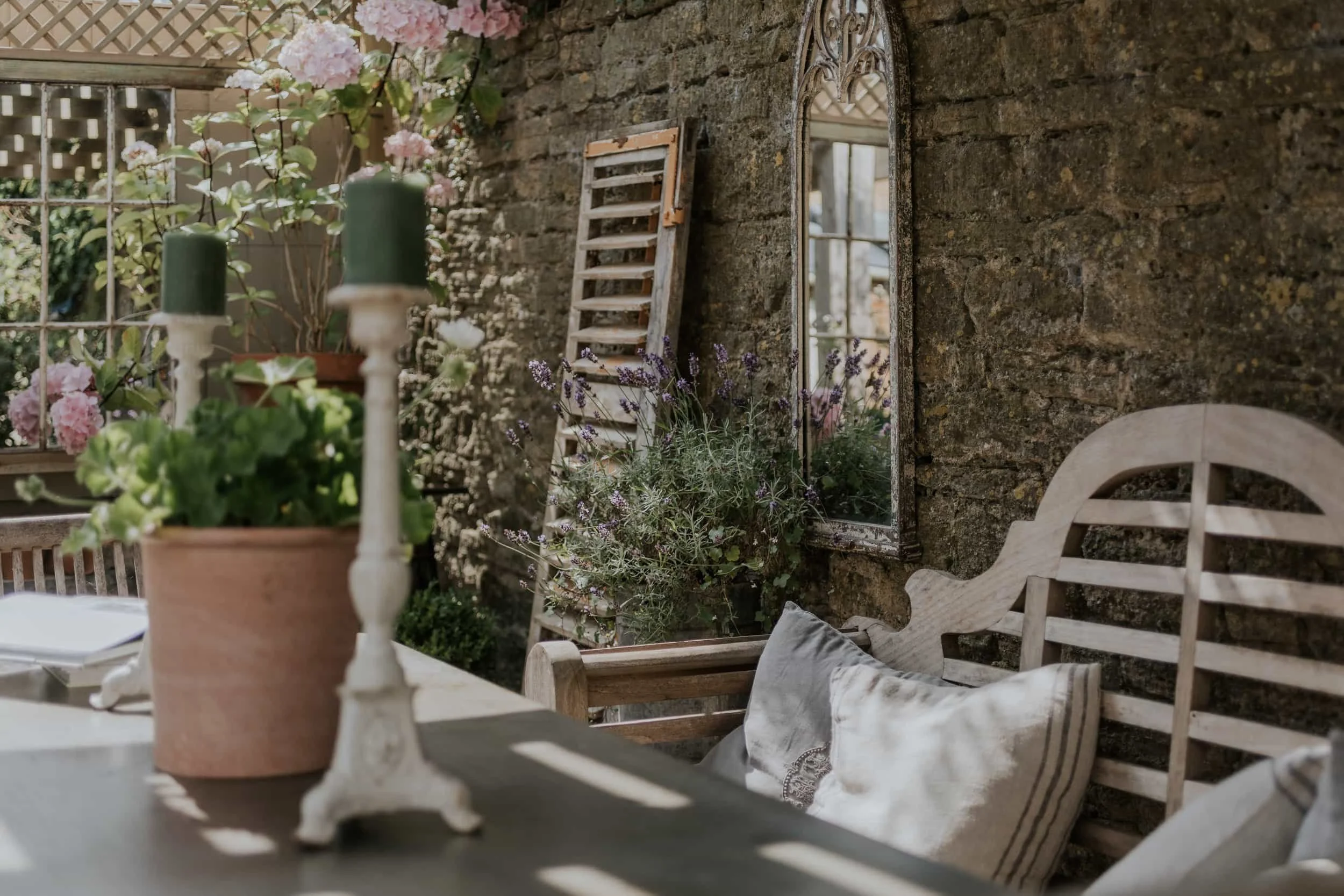
When a garden aligns with your life, behaviour changes. You step outside without hesitation. You host more easily. You choose to sit rather than scan for jobs that need doing. The space supports you instead of reminding you of what is unfinished.
Belonging is not about aesthetics. It is about reducing friction between who you are now and the environment you move through every day.
If your interiors reflect your current chapter but your garden does not, the question is not whether you care about it. It is whether you are ready for your surroundings to fully support the life you are living now.
Three Takeaways
Belonging is practical, not decorative. It is about whether your garden supports how you live now.
Low level friction matters. Unused corners, awkward layouts and high maintenance planting subtly drain energy.
Alignment changes behaviour. When a garden fits, you use it more. You relax more. You stop negotiating with the space.
Three Ways to Realign Your Garden
1. Audit How You Actually Live
Ignore how you think you should use the garden. Look at how you really use it. Do you host often? Do you want a quiet morning coffee spot? Has play been replaced by entertaining? Map your current habits, not your past ones.
2. Reduce Friction First
Identify what quietly irritates you. Is it too much lawn to mow? Seating in the wrong place? Borders that overwhelm every summer? Start by simplifying structure. Clear zones. Defined pathways. Seating that is positioned for light and privacy. Function before flourish.
3. Plan for Maturity, Not Instant Impact
Choose planting and materials that will age well. Trees that gain presence over time. Perennials that knit together. Hard landscaping that weathers gracefully. A garden should grow into itself, not need replacing in five years.
Alignment is not about starting again. It is about adjusting the framework so the space reflects who you are now. When that shift happens, belonging follows.